Shtëpi: Exhibition by the Laureates of the First Edition
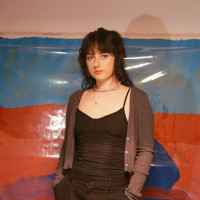
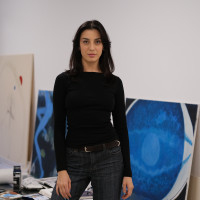
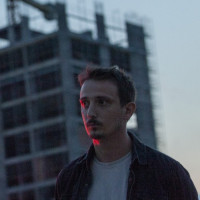
This exhibition presents the laureates of the inaugural edition of Shtëpi, a residency program developed in partnership with the Cité internationale des arts, featuring new works by Kreshnik Arifi, Renea Begolli, and Lumturie Krasniqi.
Working across different mediums, the artists share an attentiveness to fragmentation, whether visual, ecological, or sonic. Their works trace states of becoming, lingering in moments of transition and unstable form. Each practice approaches a threshold from a distinct vantage point: in Kreshnik Arifi’s compositions, inherited language fractures into unstructured sound; in Renea Begolli’s material vocabulary, the organic slips into the synthetic; and in Lumturie Krasniqi’s work, forms hover between presence and disappearance.
Presented together, these inquiries resonate across the exhibition. They consider how sound becomes a field where memory and language collide, how ecologies glitch, recombine, or resist coherence, and how light exposes hidden fractures of existence.
The First Song by Kreshnik Arifi is an audio-visual project exploring the tension between sound, memory, and language. The work juxtaposes two formative sonic experiences: the first encounter with linguistic structure through lullabies, and the unstructured, playful sounds produced by blowing into the stem of the dandelion flower, known in Kosovo as Pipilija. It examines how language carries historical and emotional memory while imagining the possibility of an unbound, pre-linguistic voice.
Set within a meadow landscape, the installation stages an encounter between these two sounds. The Pipilija emits fragile, improvisational tones that resist structured communication, while the echo of a lullaby carried on the wind introduces inherited form. Their interaction creates a subtle interference, a space where freedom and memory coexist. Further, this duality between the structured lullabies and the dandelion’s improvisational play gestures toward music and communication free from convention, recalling the instinctive freedom of pre-linguistic sound.
Lullabies carry care but also the histories and burdens of generations who transmitted language. The wandering tones of the dandelion suggest an alternative mode of expression, yet they are continually challenged by the echo of wind. This tension between inherited and free voice becomes a metaphor for negotiating collective and individual memory. By suspending these sonic states, the work opens a speculative space in which communication can be reimagined beyond historical or geopolitical constraints.
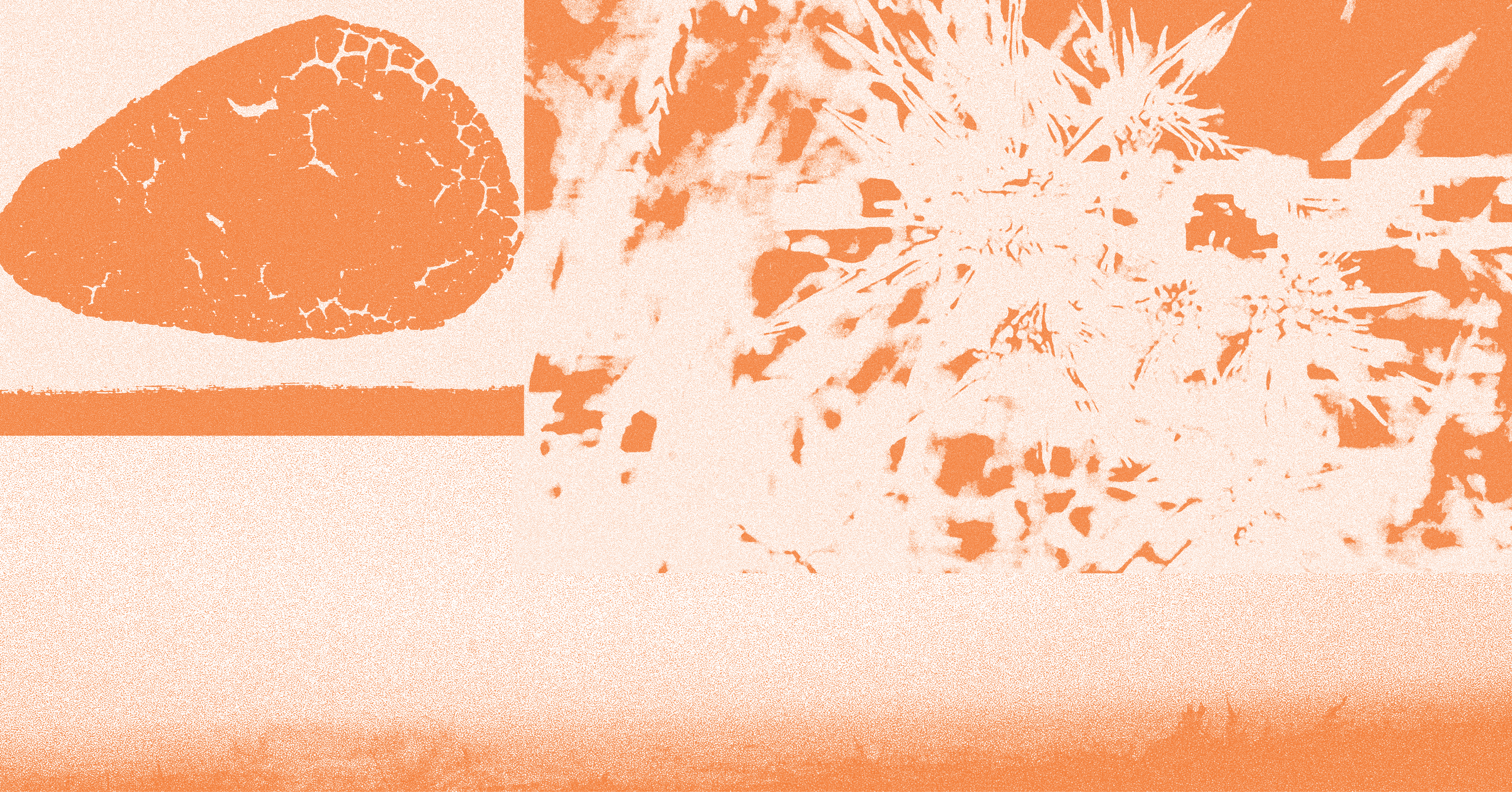
We meet at the field of glitching flowers, an installation by Renea Begolli, which brings together sculptural “glitch flowers” and landscape fragments made from new and upcycled paper, metal scraps, and plastic remnants. Rather than depicting plants realistically, these forms embody contradictions: fragile and spiky, organic and artificial, improvised and intentional.They function as fragments of an imagined ecosystem, suggesting a terrain shaped by disruption and continual reassembly.
Working with already-used materials, Begolli aligns herself with the call to “stay with the trouble”, formulated by Donna Haraway, embracing processes of transformation rather than resolution. A looping video of digitally manipulated natural forms expands this inquiry, creating a dialogue between material leftovers and their glitched digital doubles. Across both physical and digital components, Begolli approaches the glitch as method and metaphor, an index of instability suggesting that ecologies just like bodies are unstable, incomplete, and constantly shifting.
Drawing from Legacy Russell’s proposition that one “becomes a glitch,” the work probes how bodies are represented, archived, and recognized. Nature, in this installation, appears as improvised and resistant, constantly reshaping. Inspired by wildflowers, the sculptures refuse fixed identity: speculative organisms shaped by disturbance, adaptation. They mutate, misbehave, and survive through disorder.
These structures defy the expectations of symmetry, function, and normative aesthetics. They grow against the grain, revealing forms that resist prediction and control. This refusal acts as an ecological gesture, emphasizing that nature does not conform to human frameworks. Within this space of strangeness and partiality, the installation invites viewers to reflect on what it means to encounter “the other,” whether plant, body, fragment, or digital entity, and to imagine ecological, bodily, and technological relations unfolding beyond established systems of order and domination.
Existence Misplaced by Lumturie Krasniqi is an ongoing series of modular paintings that unfold as a constellation of repeated, yet never identical forms. At first glance, the works appear meditative: an almost serene field of muted hues and soft luminosity. But on closer inspection, cracks emerge. Irregular edges interrupt the calm. Tones shift unexpectedly. The figures within the paintings seem to tremble. Gaps begin to command more attention than shapes; what initially appears stable turns quietly unsettled.
The recurring form, neither body nor landscape, yet echoing both, suggests the curvature of a spine, the silhouette of a hill, the weight of an embryo. Moving from panel to panel, the viewer encounters near-doubles that refuse perfect alignment. The room’s luminosity, emanating from two distinct constellations of paintings, becomes a central material through which the installation is experienced. This light functions almost like an X-ray, exposing fractures and voids in the illuminated works; its diffused glow spills into the room, bringing forth details in the other, unlit panels that would otherwise remain unseen.
The title becomes a lens for reading the installation. What does it mean to exist out of place, out of time, or dispersed across parallel states of being? Immersed in this low luminosity, viewers are drawn into these questions. The works act as thresholds, offering glimpses into the fragility, multiplicity, and provisional nature of belonging.
Curated by Hana Halilaj.
*This exhibition is realized as part of the Shtëpi residency program, within the framework of the collaboration between the National Gallery of Kosovo and the Cité Internationale des Arts, launched in September 2025.
Shtëpi is a residency program for artists of all disciplines living and working in Kosovo.
Its aim is to foster international exchange, expand professional and artistic networks, and develop artistic practices through dedicated support for research, production, and visibility. The presented artists will take part in a three-month residency in Paris (March 3 - May 28, 2026) at the Cité Internationale des Arts.